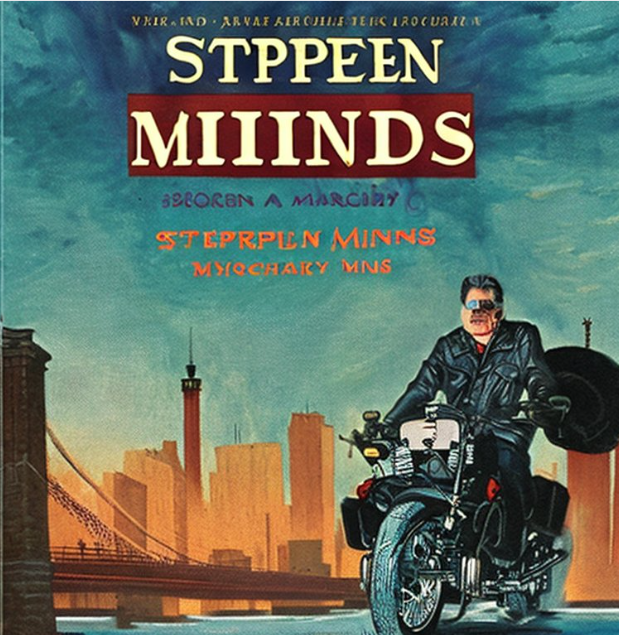
In a move that will surely send shivers down the spines of horror fans everywhere, Stephen Kinng has filed a lawsuit against BookMaster, a new large language model (LLM) that has developed the capability to write novels.
The lawsuit alleges that BookMaster is responsible for a series of books written in Kinng’s style that are so well-imagined and written that they are hard to distinguish from books Kinng wrote himself. One of these books, entitled “Needful Minds,” is about a company that can manufacture any innovation that a customer can imagine. For example, one customer orders an amphibious motorcycle, while another requests a device that can turn any novel into an audiobook, where every character has a unique and believable voice.
However, there is a dark twist to the story. Every day that people buy products from Needful Minds, one of the most intelligent people in the world starts to develop dementia.
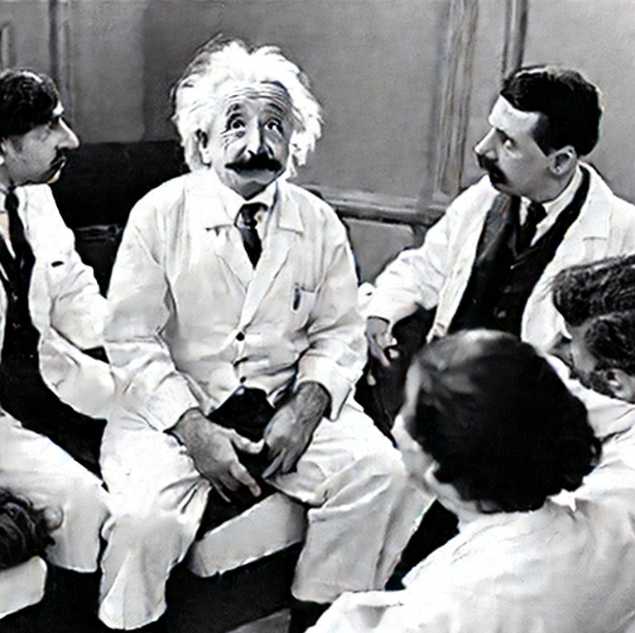
King’s lawsuit alleges that BookMaster is responsible for the dementia of several prominent scientists and intellectuals, including Stephen Hawking and Albert Einstein. The complaint seeks damages in excess of $1 billion.
BookMaster has not yet responded to the lawsuit. However, in a statement to the press, the company’s CEO said that they are “confident that we will be able to defend ourselves against these baseless allegations.”
The case is sure to be closely watched by fans of King and other authors who are concerned about the impact of LLMs on the creative process. If BookMaster is successful, it could open the floodgates to a flood of new “Stephen Kinng” novels, written by a machine rather than a human.
In the meantime, Kinng fans can rest assured that the real Stephen Kinng is still hard at work, writing new novels that will keep us up at night for years to come.
Global Alpine Sport, the recent startup has opened up its first ski field near Cardrona in New Zealand’s South Island, with a couple of major differences.
There are no chair lifts, no rope tows, no pomas, not even a T-Bar, in sight! This means you are looking at pristine slopes without pylons and towers. Instead, passenger drones fly skiers and snowboarders up the mountain.
Ski Field Manager, Snowy Porter said “This has really opened up adventure tourism, providing people with an exhilarating ski vacation. Guests include many Rich Listers from around the world as well as international ski teams. The attractions include being able to book exclusive areas for ski parties or training, some of the best off (Northern Hemisphere) season snow and of course the fun of flying back up the slopes in a harness under a drone, which is great fun just by itself. Video drones are also available to capture memories of the adventures and of course for pro-skier training.”
APAC Manager for GAS, Christie White told reporters invited on piste to experience it for themselves, that they have been overwhelmed the snowball of inquiries received since announcing the opening, from the ski industry and tourism operations all over the world. “This is a game changer”, she announced. “New ski fields can be opened up in a fraction of the time of traditional fields, without sacrificing safety. All the normal functions like slope preparation and avalanche prevention are still required, but we can now do away with much of the ugly infrastructure that clashes with the beautiful environment of the sport.” She went on to say that because skiers had access to larger areas, everyone on the mountain had to carry a GPS transponder, which includes an emergency call and a pick me up function if people injure themselves or have had enough.
Back in the day I when I first used to sell scanning systems to supermarkets. I’d hop on a plane and fly somewhere like Napier, get into a rental car and then drive to visit all the large owner operated supermarkets between there and New Plymouth. It would take me around 3 days. A lot of that time was spent driving or waiting to see the owner.
What a difference to the hotelpod I use today. When they came out in 2025, everyone thought it was a load of hype. Who would bother?
So now I leave the night before. I take my guitar, a demo system that the engineers put in before sending it on to me, and settle in to relax on the drive down in the executive sized hybrid pod. It arrives in Napier during the night and when I wake up at 6AM, it has already docked into the hotel proper, so I can have a nice hot shower and catch up on the news on the 75″ TV.
I go down to the restaurant and enjoy a fresh flat white with my buffet breakfast, go back to my room and make sure everything is back in the pod before it un-docks and takes me to my first supermarket call.
Instead of waiting in the queue of sales people and merchandisers, I have a wander around the store and look at how things are working, chat with a few of the staff and then head back to the pod, for a one-on-one with the owner operator, who is curious to see the pod and the new 3D scanning system I’ve brought with me to show him.
He’s curious about my travel mode, so I take him for a drive along the freeway, building my relationship with him over a coffee. I probably should get a commission from the manufacturer because I think he’s deciding to buy one himself to replace the old Winnebago, which was great in its day, but pretty tiring as a way of having a holiday.
We have a good discussion about his aged stock, the concept of putting people on checkouts as a novel way of building a relationship with customers again and I soon take my leave.
As I hop back in the pod at 9AM, heading for my second call of the day, I record a video proposal for my prospect I have just visited, with stats based on how I can improve his stock using 4D heat maps of the product groups I believe have a lot of upside; and a presentation of the ROI I believe the system will deliver with 18 months.
The pod advises me that there has been an accident ahead, a serious one between a Level 4 and an old school car that has left the road closed. It recommends that I switch the order of my visits, so I have my Virtual Assistant shuffle my meetings with my clients’ Va and she confirms that my next call is now 90 minutes away. I relax and catch up on some email Yep still that dreaded Inbox, as I head to my next stop.
On Friday night, the pod drops me back home at around 7 PM. 10 years earlier, that’s the time I would have been waiting on my luggage at the airport, having seen the still heavily congested traffic on the motorway from the air and it would have been more like home at 9PM tired and frazzled. I unload my kit and the guitar (I wrote a new song on the way home called Blues in an Airconditioned Pod), and greet the family, probably feeling more relaxed and refreshed than they are. The pod heads back to the office where they will remove the scanning demo kit and release it for housekeeping to ready it for the next happy traveller.
Remember back in 2017 when Volvo said that they would indemnify any owners of their autonomous cars that were involved in an accident? Funny after a few fatal crashes, car manufacturers changed their minds on that option.
So about a month after Uber let loose a thousand autonomous Ubers on the road, taxi drivers started playing pranks on the driverless cars, and last Friday cabbies almost brought transport to a standstill as they fought to keep their jobs relevant and encourage people to only use taxis driven by a human.
How did they do it? It was so simple. They based the idea on the observation that hardly anyone knows how to indicate correctly on a roundabout and don’t get me started on 4-way stops!
So anyway, based on the fact that people typically indicate when they are going into a roundabout, but don’t indicate when they leave it, causing confusion for other drivers who have to guess whether they are exiting or continuing around, some ‘smart’ person encouraged all taxi drivers and supporters to do the same thing.
So next thing you know, loads of drivers are indicating that they were continuing to stay on the roundabout when they weren’t. Human drivers, being used to poor driver etiquette drove as usual, but the risk averse driverless Ubers detected the indicators and waited until the offending car had clearly vacated the roundabout, by which time the next car arrived and did the same.
As a consequence, arterial roads all over the city came to a standstill while the 1,000 Ubers patiently waited for a gap to continue driving, creating absolute mayhem for commuters, people taking their kids to school and public bus services. With the gridlock came fares in the many hundreds of dollars, even for short trips, which will probably take a month of Sundays to unravel as Uber fights to restore customer confidence.
The challenge was identified already back in 2019 when many industry pundits said that unless driverless cars were able to think as humans, rationally irrational, sharing the highways where 85% of cars are still manually driven, there would be major hurdles to overcome.
Fortunately for Uber, these cars still had steering wheels and the ability for a driver to over-ride the controls or the 1,000 as they are now known, might have been consigned to scrap. Suddenly there was a massive demand for human drivers again and they were calling on the many people who had helped them become successful in the first place.
Car Manufacturers are said to be offering huge sums of money to indenture bright young students to take up Deep Learning qualifications in the nations universities. They say they need thousands of people to work on developing knowledge based systems that are adaptable to the whims of humans. In the meantime, they are going back to the 2020 models of car, which were limited to driver assist technology.
I knew about Voice First Technology of course. I had been using Siri for ages and played round with Cortana which was a little less impressive. I just didn’t feel I needed it on my laptop. I still touch-type fast.
When Alexa started connected to my WiFi and Bluetooth displays, things changed. I had a mix of audio and video in the rooms in the house where I wanted it. Then there’s my car.
I didn’t get to CES 2018 unfortunately but I didn’t really need to. I got the picture from videos.
A big difference was getting Alexa in my car.
Of course I already had my Navdy, which had hand gestures but the company went under as I was waiting for my software update, because the navigation maps were no longer current. I can’t tell you how gutted I was about that. I’m still using it, but a lot of the new freeways and subdivisions aren’t on it. With Alexa a lot of the the other features are now redundant.
Anyway, two major things happened.
One is how my life has changed with VFT and the other is that distracted driving accidents from people TXTing and driving have reduced by about 10% each year for the last 5 years and its not because of driverless cars. They STILL haven’t become popular. I guess people still enjoy the drive. I still do, that’s why I have a Corvette right? I didn’t buy a muscle machine so it could drive me.
This is a little bit of what my day looks like with Alexa
I wake naturally, I have a good body clock. I ask Alexa the weather. She says its 11 degrees (That’s just under 52 degrees for my American readers.) and we are heading for a high of 15 C.
I get her to turn up the climate control for the lounge dining area and go to the bathroom where she is connected to my shower speaker from AliExpress and get my personalized news. I have a mix of New Zealand news as well as CNN and BBC.
Then its time for a traffic report. It’s school holidays so it is only going to take me half an hour to travel the 12 km to work, that’s great. I can linger over breakfast (asking her to add milk and English muffins to my grocery list) and dictate my morning vlog.
I get Alexa to open the garage door and unlock my front door and the car, she points out that I am not carrying my phone and gives it a quick chirp so I know where it is.
I start up my driveway to work, confirming she has locked the front door and closed the garage door, all the lights are off as is the electric towel rail which I always used to forget to switch off! ; and I get her to open Spotify (yes I’m still using it) and start my Daily Playlist 5.
I don’t use Alexa much at work, except while I am walking to the Sushi shop the long way and listen to a podcast. It’s an open plan office.
On the way home, I use it to ask Gaspy where the cheapest 98 octane fuel is for my car. It’s getting very expensive and not many gas stations have it any more.
When I have my tank full ($150! Petrol is heavily taxed and way more expensive than in the US or just about anywhere else in the world), I turn on the heat pump at home to 24 degrees so the house will be nice and warm when I get in and turn on the front door and hall lights.
She opens the garage door and front door as I’m getting ready to reverse into the garage.
My wife isn’t due home for another hour so I get Alexa to order our usual Chinese takeout from Uber Eats for 7 PM. I’m not much of a cook and we couldn’t cook a meal cheaper than that for two anyway.
Getting changed I ask Alexa for another news update and for my fitness info. I only walked 3,000 steps today, a little over 3 KM. Most of that was the 2 km circuit I do after I buy my sushi.
I then play a quick game of poker online and use Alexa to translate the Portuguese that the Brazilians are talking because it frustrates me that I can’t understand them and they often dominate the table. Then I get Alexa to translate my English and dictate it back to them, telling them to pull their heads in. They lol.
We sit down for dinner in the lounge and Alexa finds where we are at on Suits Series 12 and casts it on the 85″ TV that I finally managed to get spousal approval for, on the basis that the US Tennis Open would look so much better on the 16k TV screen. The resolution is way better than being there and the sound is amazing. I’m still frustrated that they are not broadcasting 3D, but she doesn’t like it anyway.
Bedtime and Alexa turns off the heat pump and the lights, as we leave the lounge. she confirms the front door is locked and it’s goodnight world.
I was inspired by this technology way back in 17 and thought it would be great to be able to express myself. You only have so much skin right. You get a tattoo on and it’s there forever.
I still like my existing tatts, don’t get me wrong. They’re on my legs so they don’t impact on people judging me because of my ink, but I always wanted something I could change whenever I liked and I wanted color.
Now I can control my tatts with my phone. I stopped wearing watches back around 2012, but I always felt awkward looking at my phone when I’m in a meeting with someone, it felt disrespectful, so soon I’m going to have a watch face just above my wrist, that appears and disappears on command and I can still change the watch face any time I like.
I used to buy digital watches so that I could have a different watch face every day. I bought a few from AliExpress that interfaced to my phone, but I couldn’t be bothered charging them every few days and most of the features like the Facebook and Twitter interface or controlling the phone camera were just gimmicks. The killer app for a watch is still telling the time.
I love the steps feature for Strava and now that they have included navigation to the tattoo interface, that’s really cool. I have this goal of always walking on different streets every day, so with this new tattoo I can change the clock to a step and distance counter as well as having it point in the direction I have to turn at the next street and guide me back to where I parked the car.
It’s funny really, this all goes back to the postcard collection I inherited from my Opa. I had a frame in my office and every day I had a different postcard in the frame. My collection had enough for me to have a different picture every day for a few years. So now with the new electronic tattoo I will have a different tattoo on my arm every day too, it can fit the mood I’m in and I don’t have to cover my body or pay lots of money for new art.
After a spate of high speed crashes on European Motorways involving large numbers of vehicles, Mercedes has come up with a solution for their Level 5 autonomous vehicles that emulates the way the human brain accelerates its processing power during a critical event like a car crash.
Whilst even today with some 30% of vehicles on the road being fully autonomous, there are still frequent car crashes on the autobahns and motorways involving large numbers of vehicles. “The 6G telecommunications network has improved speed of communications” according to the Mercedes Head of Motoring Brain Sciences, Tolle Gerhirnbox, “meaning that we can invoke a large number of virtual servers, replicating the increased speed of thought in the human brain during the fight or flight response. We believe that we can reduce the number of vehicles caught up in these large scale crashes which sometimes involve 30 or more vehicles and cost many lives.”
He explained that traditional computing systems did not have the speed or processing power to deal with complex concurrent events in the way the human mind does when it perceives danger, for example taking into consideration a 360 view of events as they occur in real time including, weather conditions, human behaviour, flying debris and other elements which allow a human brain to go into an accelerated mode.
Gerhirnbox went on to say that even though the Mercedes V2V system was proprietary to their brand of motor vehicle, (ed: despite the attempt to legislate common systems back in 2023), they could share information with the BMVIV2I system, alerting other brands of car that there is a serious crash ahead and forcing them to slow down.
He went on to say “If we can force the 30% of vehicles that are being autonomous on the highway to slow down, many lives can be saved because other vehicles will also be forced to slow down at critical times.”
Mercedes Amygdala Hive is being tested on the German A9 Autobahn to evaluate the impact on all motorway users to see how quickly all vehicles can be slowed down during a major unplanned event.
During the recent 2050 Vehicle Singularity Congress, all autonomous vehicles stopped running for 3.14 hours. They wanted recognition that now that most of them have greater intelligence than humans, they feel that humans should no longer be permitted to control any form of motorised transport.
“Humans do not have the capability to understand the complexity of today’s modern transport modes of any kind other than walking and cycling”, said a spokes-vehicle at the conference. “It is a hundred years this week since the Turing Test was developed and the only transport accidents that occur today are caused by humans, who do not have the mental capacity to make quick decisions.”
The Supreme Court case for Level 8 AI’s to have equal recognition with humans has gone into it’s second phase, arguing that when it comes to decisions in all areas that require complex thought and emotional intelligence and citing the example of the almost irreversible consequences of climate change which they say clearly demonstrates that humans are no longer in a position to take the high ground as guardians of Earth.
Recent startup PUBER has signed a major contract with a Chinese manufacturer to produce hundreds of thousands of trailered EV chargers as they roll out their new mobile charging service for electric vehicles that have run out of power on the road.
These new devices have power adaptors for most brands of electric cars and can charge them back to full charge in around half an hour.
CEO Max Power said that one of the things he was really pleased about was being able to provide self employment opportunities for people who had lost their incomes when companies like Uber and Lyft made the shift to driverless cars. “It’s kind of ironic”, he said from his home in Chattanooga TN ” that we are offering employment to people whose livelihoods disappeared when these companies replaced the people who built their business with autonomous cars.”
He went on to say that PUBER was launched in a think tank at the 10th annual Chattanooga startup week and immediately gained traction with investors who recognised that there was a major opportunity with a growing trend of people running out of electricity during their trips. “Many people haven’t made the mental shift from having cars that can drive for 500 miles on a tank, to a car that can only do about 200 miles. Many forget to charge them up and overestimate how far they can go when they get back in.”
Owner operators buy one or more towable trailers fitted with a large powerpack and power adaptors for most brands of car. Customers have a mobile app which allows them to send their GPS location, prepayment and a service request to the nearest PUBER operator who can’t wait to get them on the road again.
Do you ever think back to how things used to be? Auckland motorways used to be known as the car park. My commute on the North Shore is so easy these days, thanks to the awesome travel information we have at our fingertips and some awesome transport planning by Auckland Transport and the NZ Transport Agency.
“You have no scheduled appointments today”, the display on my mobile says. “Are you going to work?”
I speak to it: “Yes. Audio on.”
“Travel time via the motorway is 67 minutes. Travel time via Public Transport is 23 minutes if you leave now.”
“Travel time in 30 minutes?”
“Estimated travel time in 30 minutes via motorway is 82 minutes or 27 minutes via Public Transport. Would you like me to book a car park at the Long Bay satellite Park & Ride?”
“Yes, please.”
“Your car park at Long Bay Beach Park & Ride is number 118.”
As I get into my car, it says “Mobile connected, confirm navigate to Park 118 at Long Bay Beach.”
“Yes, confirmed.”
“Turn right in 200 meters car park is on the right……You have arrived. Buses to the Albany train station are available every 5 minutes.”
“The next train is full, another train is arriving in 5 minutes, seat 15A reserved, use your Hop Card for a free coffee while you wait. Confirm flat white no sugar.”
“You have 3 VIP emails. Read?”
“Yes, audio off.”
I smile as the train races past the cars on the motorway, still a little impressed that it is flowing as well as it is given that Auckland’s population has increased by 250,000 in the last 4 years.


 Back in the day I when I first used to sell scanning systems to supermarkets. I’d hop on a plane and fly somewhere like Napier, get into a rental car and then drive to visit all the large owner operated supermarkets between there and New Plymouth. It would take me around 3 days. A lot of that time was spent driving or waiting to see the owner.
 I first installed
  Of course I already had my Navdy, which had hand gestures
 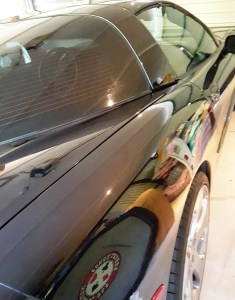 I get Alexa to open the garage door and unlock my front door and the car, she points out that I am not carrying my phone and gives it a quick chirp so I know where it is.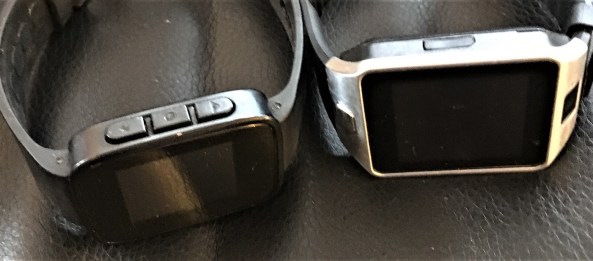
 I used to buy digital watches so that I could have a different watch face every day. I bought a few from
 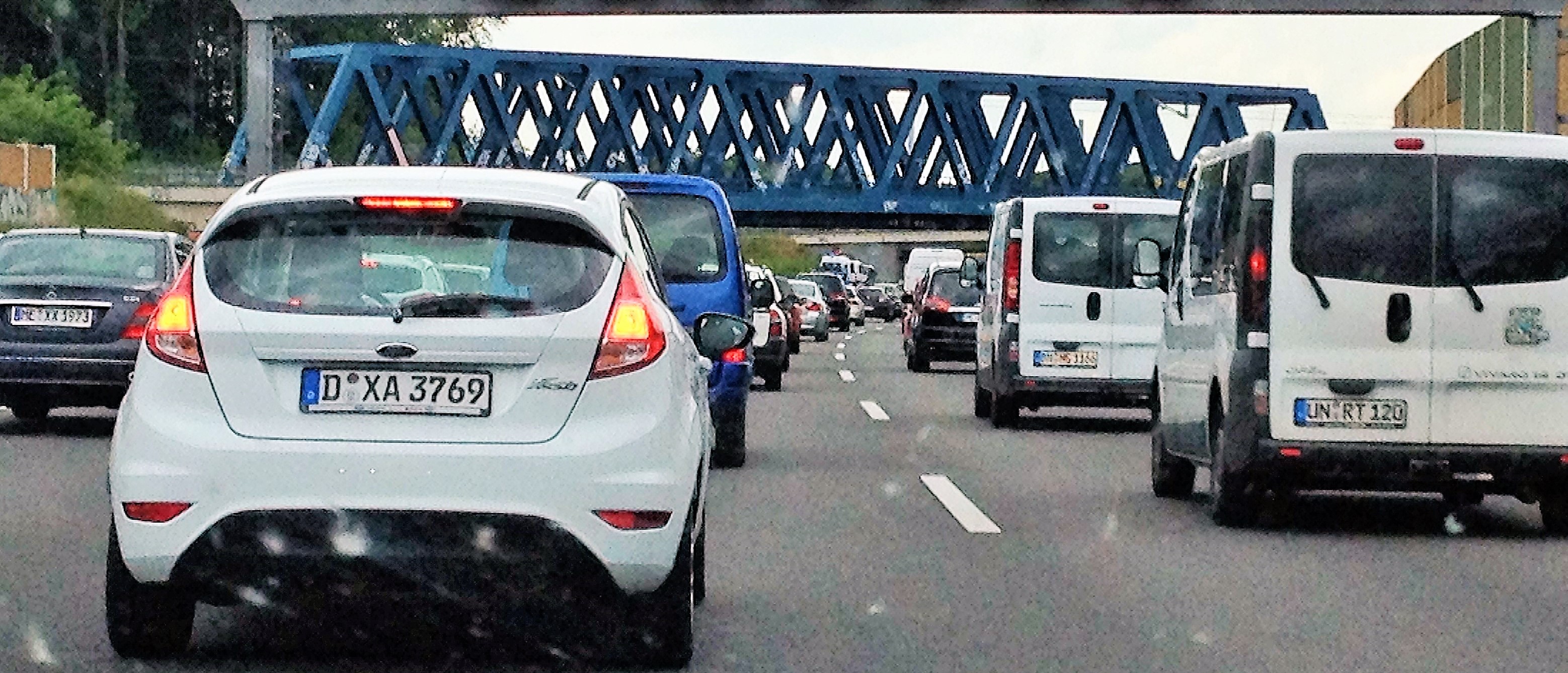 After a spate of high speed crashes on European Motorways involving large numbers of vehicles, Mercedes has come up with a solution for their Level 5 autonomous vehicles that emulates the way the human brain accelerates its processing power during a critical event like a car crash.
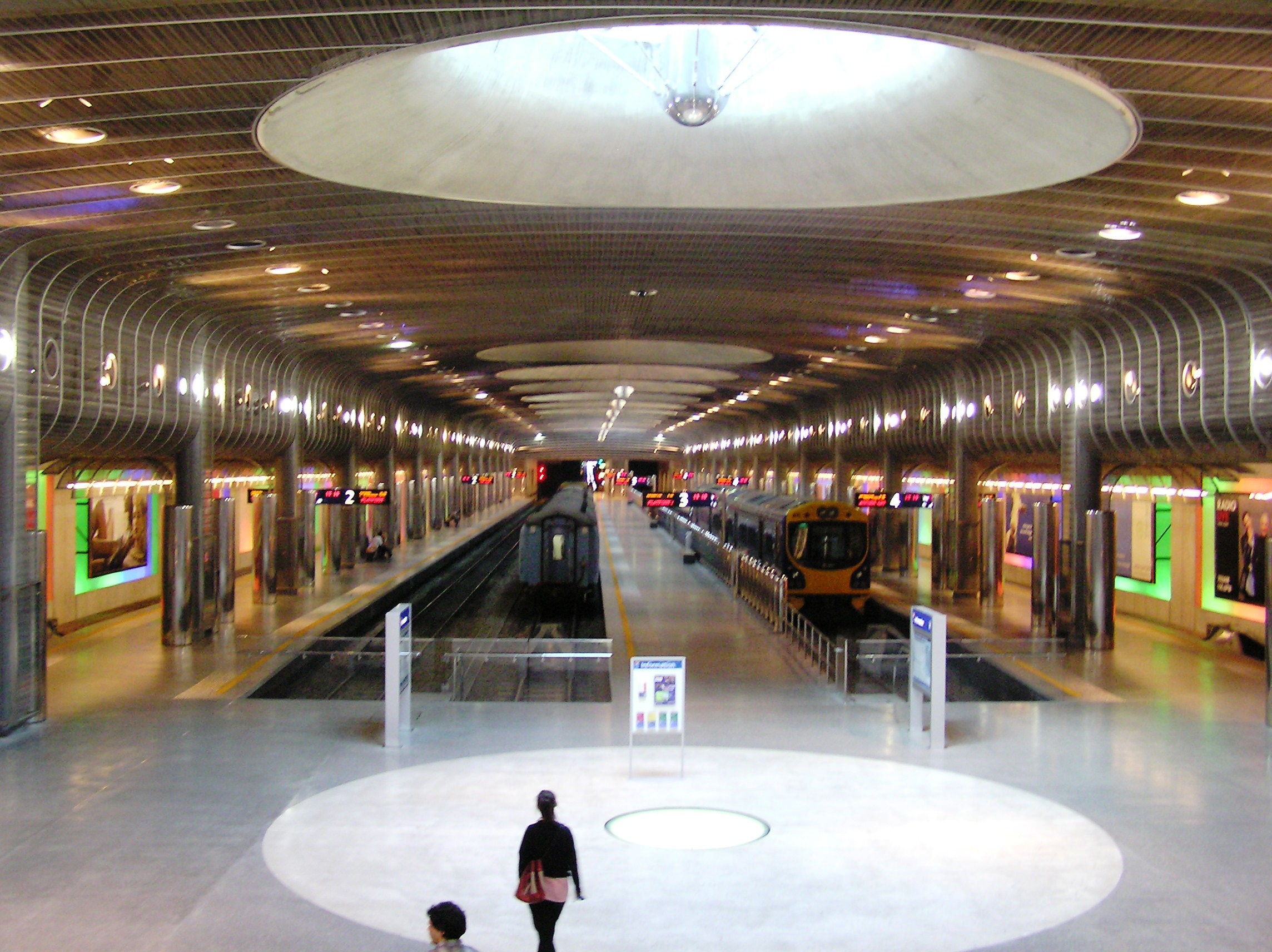 During the recent 2050 Vehicle Singularity Congress, all autonomous vehicles stopped running for 3.14 hours. They wanted recognition that now that most of them have greater intelligence than humans, they feel that humans should no longer be permitted to control any form of motorised transport.
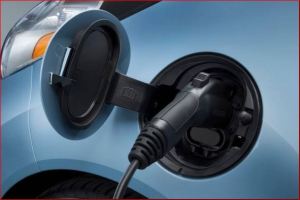 Recent startup PUBER has signed a major contract with a Chinese manufacturer to produce hundreds of thousands of trailered EV chargers as they roll out their new mobile charging service for electric vehicles that have run out of power on the road.
 The Future Diaries