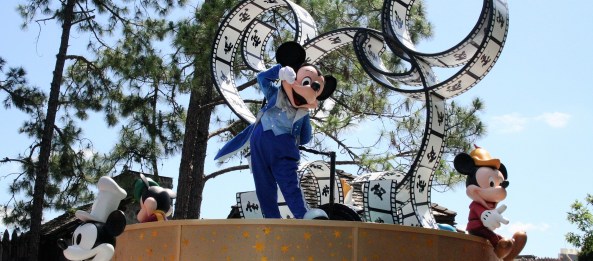

After COVID19 several countries in Europe, as well as the USA, started relaxing their lockdown requirements. More people went back to work, and there was an explosion of activity in the hospitality and entertainment industries.
From bars and clubs to restaurants and of course the beaches, people flocked in droves, reuniting with friends and family. They went to the parks. Football and other sports held field days and played demonstration matches because the leagues and tournaments had been cancelled.
Three weeks later COVID20 emerged. It was even more virulent than COVID19 and hit hard. Worst hit were young people in the 16-30 age bracket. It was believed the reason was that they were the group who had felt the isolation the most and therefore binged the most on the return to society.
Despite the numbers of those affected growing exponentially within weeks, teenagers and young adults resisted going back into isolation lockdown and once again the ICU’s were full. Sadly these were mostly young people, not the older people with additional health complaints that made them less able to resist the previous coronavirus strain.
Then the mobile games division of Disney came up with an idea based on concepts of Game Designer Jane McGonigal. They modified an augmented reality location-based game that had already been in the making. McGonigal explained, “We needed to positively reinforce the behaviour that would incentivise players to stay close to home within the lockdown requirements, but not stifle them so much that they would go stir crazy.”
The game, called Lockdown, like Pokemon, was based around capturing Disney characters. It only worked within a three-mile radius of the home location of each player. Characters were more interesting and had greater value, the closer to home and the farther away they were from people, not part of their bubble.
If players went within 4 meters of a player, who were not members of their bubble, (which the game worked out using AI) captured characters would escape at the rate of 50% per minute that people stayed within vicinity of those people. The other people didn’t even have to be playing the game. As long as they had any form of mobile device on their person, characters were lost.
Miraculously, like the happy ending of a Disney movie, 4 weeks after the game was launched, the peak died down and, well the rest is history. So many lives had been lost, but the world settled down to a new state of normal over the final months of 2020.
The president hailed McGonigal as a great, great person, who triumphed over adversity as he predicted someone would. “Of course, it was no coincidence”, he explained, “that it was Disney, an institution as American as apple pie, that came up with the solution to this second horrible, horrible pandemic.”
McGonigal said, “This was a wonderful opportunity to demonstrate the power of games to influence people to want to do the thing that needed to be done, by positively reinforcing the correct behaviour. I was lucky that Disney believed in me because everyone else was focused on punitive measures and of course dealing with the health crisis.”
And the rest folks is history.
If this blog made you chuckle, you might like to make a small donation to encourage me to do more on Patreon.
 I first installed
  Of course I already had my Navdy, which had hand gestures
 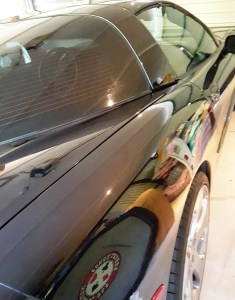 I get Alexa to open the garage door and unlock my front door and the car, she points out that I am not carrying my phone and gives it a quick chirp so I know where it is.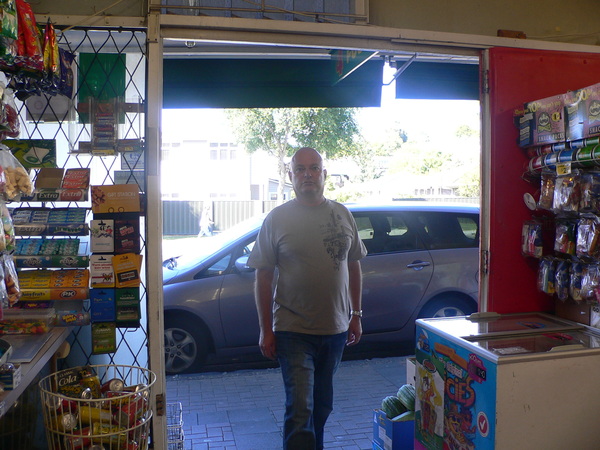
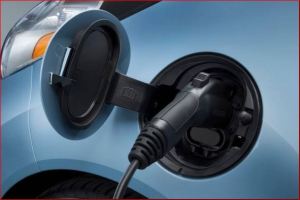 Recent startup PUBER has signed a major contract with a Chinese manufacturer to produce hundreds of thousands of trailered EV chargers as they roll out their new mobile charging service for electric vehicles that have run out of power on the road.

 A spokesperson for Vodafone explained in a brief media Telephony 101 presentation that the concept of phone numbers has evolved from the early days when telephone exchange operators used to manually connect phones. Exchanges automated this process with rotary exchanges with technology such as in this image which is the technology that many New Zealand exchanges such as Wellesley Street in Auckland, where a relay tripped to select each number, then routed the call through to exchanges where typically the first two numbers represented the exchange area. For example Ponsonby numbers all started with 76 and Howick numbers with 83. Over the years this technology became computerised and with number portability the number no longer had to relate to a specific location in the country.
 This reduced range combined with a continuing decrease in the frequency of people going to shopping malls provided the impetus for Westfield to come up with a new loyalty program for shoppers combined with a mobile application.
 The Future Diaries