Vodafone has announced that phone numbers will no longer be necessary for mobile subscribers in New Zealand. New and existing subscribers who do not run POTS (Plain Old Telephone System) landlines will from next week have the option of not having a phone number, they will be able to use their own name or a pseudonym username.
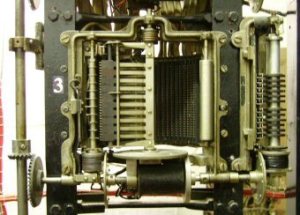 A spokesperson for Vodafone explained in a brief media Telephony 101 presentation that the concept of phone numbers has evolved from the early days when telephone exchange operators used to manually connect phones. Exchanges automated this process with rotary exchanges with technology such as in this image which is the technology that many New Zealand exchanges such as Wellesley Street in Auckland, where a relay tripped to select each number, then routed the call through to exchanges where typically the first two numbers represented the exchange area. For example Ponsonby numbers all started with 76 and Howick numbers with 83. Over the years this technology became computerised and with number portability the number no longer had to relate to a specific location in the country.
Over the last few years the majority of people communicate with VoIP and numbers have largely become irrelevant. Emergency numbers will remain indefinitely for a number of reasons, but with most people having Unified Communications across their various mobile devices and appliances there just is no reason to maintain an antiquated system. People may continue to use a number if they wish, according to a spokesperson from TUANZ, in support of the baby boomers who are still a large number of people who may no longer have copper wires fed into telephone exchanges, but are more comfortable with the analogue concept of a number.

 The Future Diaries